
When you’re facing a skin cancer diagnosis, the treatment you choose matters. Mohs micrographic surgery offers patients the highest cure rates available for common skin cancers while preserving as much healthy tissue as possible. At Duncan Dermatology, this specialized technique combines surgical precision with immediate pathological analysis to ensure complete cancer removal in a single visit.
What is Mohs Surgery?
Mohs surgery differs fundamentally from other skin cancer treatments. During the procedure, your surgeon removes thin layers of cancerous tissue one at a time, examining each layer under a microscope before removing the next. This process continues until no cancer cells remain visible. Think of it like peeling an onion, but stopping exactly when you’ve removed all the affected layers.
The technique was developed in 1936 by Dr. Frederic Mohs at the University of Wisconsin. While the original method used chemical fixatives and took days to complete, modern Mohs surgery uses fresh tissue examination that allows for same-day treatment and reconstruction.
The procedure has evolved significantly, but it still relies on Dr. Mohs’ fundamental innovation: creating detailed maps of tissue specimens using color-coded dyes to pinpoint exactly where cancer cells remain.
For primary basal cell carcinomas, Mohs surgery achieves cure rates exceeding 99%. Squamous cell carcinomas that haven’t been previously treated have a 97% cure rate. Even for recurrent cancers, the cure rates remain high at 97% for basal cell and 90% for squamous cell carcinomas.
Am I a Candidate for Mohs Surgery?
Your dermatologist might suggest Mohs surgery for several reasons. The procedure works best when cancer borders aren’t clearly defined or when the tumor sits in a cosmetically sensitive area like your face, ears, eyelids, or lips. These locations require maximum preservation of healthy tissue to maintain both function and appearance.
Large tumors, aggressive cancer subtypes, and cancers that have recurred after previous treatment also benefit from Mohs surgery. If your biopsy shows the cancer has microscopic features like morpheic pattern, infiltrating growth, or perineural invasion (tracking along nerves), Mohs surgery provides the thoroughness needed for complete removal. The technique particularly suits patients who want the highest possible cure rate combined with the smallest surgical wound.
Our St. Helena Mohs Surgeon
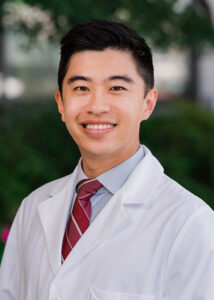 Mohs surgery requires specific expertise. Surgeons must complete accredited fellowship training beyond dermatology residency to perform the procedure.
The American College of Mohs Surgery certifies training programs and ensures surgeons meet rigorous standards. This specialized training enables surgeons to function as the surgeon, pathologist, and reconstructive surgeon throughout your care.
Dr. Chao at Duncan Dermatology is a double board-certified dermatologist who was fellowship-trained in Mohs micrographic surgery at the University of Alabama in Birmingham. He has extensive education, experience, and skill in treating basal cell and squamous cell carcinomas, ensuring accurate identification and removal of cancer cells, as well as comprehensive preservation and reconstruction of healthy skin.
What Happens During Mohs Surgery?
Mohs surgery is performed in your dermatologist’s office under local anesthesia. The procedure follows a systematic sequence designed to remove all cancer while sparing healthy skin.
First, Dr. Chao removes the visible tumor along with a small margin of normal-appearing skin. This tissue gets marked with reference points and color-coded dyes that correspond to a map of your surgical site.
A technician processes the specimen in the office laboratory, preparing frozen sections that preserve the tissue’s architecture. Dr. Chao then examines these slides under a microscope, checking every edge and the base of the removed tissue for cancer cells.
If cancer appears in any section, the map shows exactly where it remains. Dr. Chao removes another thin layer only from that specific area, processes it the same way, and examines it microscopically.
This cycle continues until the microscopic examination shows clear margins. Each stage typically requires about an hour for processing. Most cases require 1 to 3 stages, though some complex tumors may require more.
Reconstruction after Mohs Surgery
Once all cancer has been removed, your surgeon discusses reconstruction options based on the wound’s size and location. Small defects might heal on their own or close with simple stitches. Larger wounds, especially on the face, often need more complex reconstruction using a skin flap or graft.
A skin flap uses adjacent tissue that’s moved to cover the wound, maintaining blood supply from its original location. Skin grafts involve taking tissue from another body area.
Dr. Chao selects the reconstruction method that will provide the best functional and cosmetic result for your specific situation. Facial reconstructions often take additional time to ensure optimal healing and appearance.
What to Expect During Recovery
Bruising and swelling are normal after Mohs surgery, particularly around the eyes and lips. These effects peak within the first two days and typically resolve within a week. Dr. Chao will place a larger initial bandage that gets replaced with a smaller one after a day or two.
Many patients return to work the day after surgery if they’re comfortable wearing a bandage and having visible bruising. Suture removal timing depends on location: face and neck sutures are removed between days five and seven, while those on the scalp, body, or limbs remain in place for 12 to 14 days.
Following your wound care instructions carefully promotes optimal healing. Most patients heal with minimal scarring, though some wounds take several months to fully mature. A small percentage of patients benefit from minor revision procedures or laser treatments to further improve the cosmetic outcome.
Schedule Your Appointment Today
A skin cancer diagnosis requires thoughtful treatment decisions. Mohs micrographic surgery offers the highest cure rates available while preserving your healthy tissue. The technique’s precision and same-day completion make it an excellent choice for many patients facing basal cell or squamous cell carcinoma.
If your dermatologist has recommended Mohs surgery or you want to learn whether it’s appropriate for your situation, schedule a consultation at Duncan Dermatology today!